Mechanical Seals: The "Invisible Guardians" of Industrial Equipment - Do You Really Understand Them?
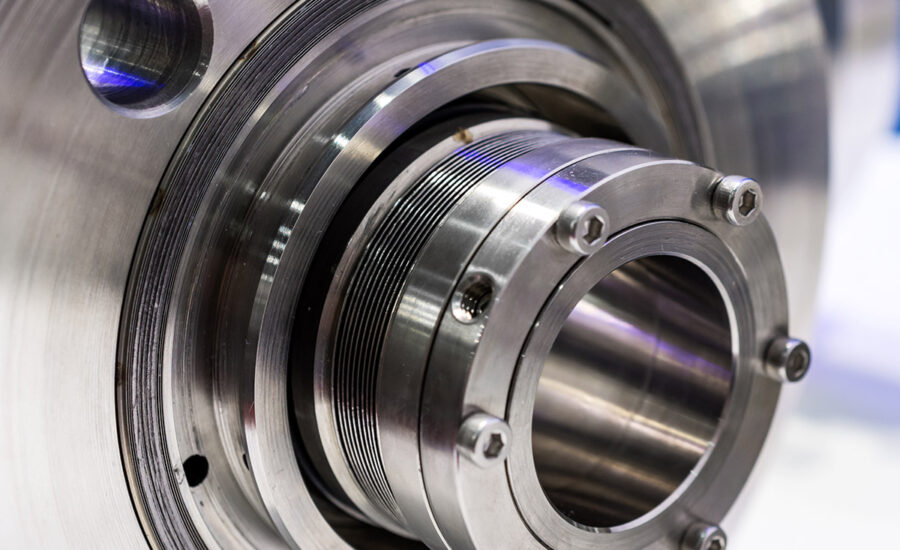
Beside the reaction kettles in chemical plants, in the pump rooms of sewage treatment plants, and even in the water circulation systems of household water heaters, there is an unremarkable yet crucial component that is always working silently - it is the mechanical seal. This seemingly simple device undertakes the core mission of preventing fluid leakage and ensuring the efficient operation of equipment. Today, we are going to uncover the mystery of mechanical seals and see what makes these "invisible guardians" so remarkable.
1. What is a Mechanical Seal? The Key to Breaking the "Leakage Curse"
Simply put, a mechanical seal is a dynamic sealing device used between a rotating shaft and a stationary housing. It relies on two sealing end faces perpendicular to the rotating shaft (usually composed of a pair of hard and soft materials). Under the action of fluid pressure and elastic elements, these end faces fit tightly to form a tiny sealing gap, thereby preventing medium leakage.
Compared with traditional packing seals, the advantages of mechanical seals are "crushing":
- The leakage rate is extremely low, usually controllable below 0.1ml/h, far exceeding environmental protection standards;
- The friction coefficient is small, and the power loss is only 1/10 to 1/5 of that of packing seals, with significant energy-saving effects;
- It has a long service life, which can run continuously for 1 to 2 years under normal working conditions, reducing the number of shutdowns for maintenance;
- It has a wide range of applications, capable of stably handling everything from normal temperature and pressure clear water to high-temperature, high-pressure, and corrosive media.
2. The "Four Core Components" of Mechanical Seals - None Can Be Missing
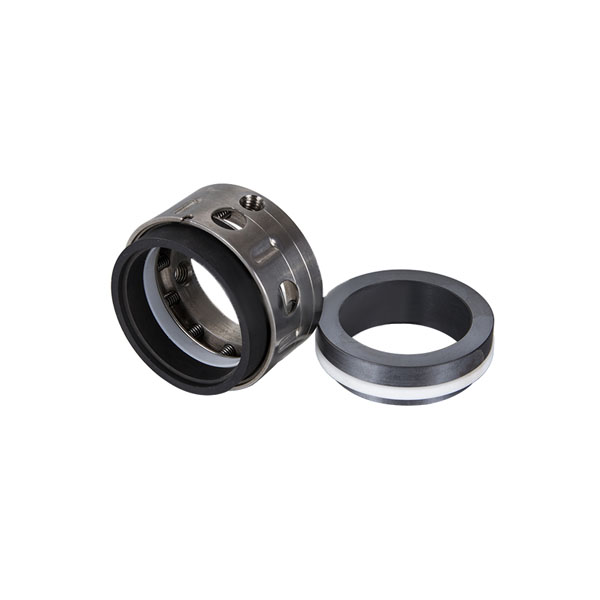
A seemingly small mechanical seal is actually a precisely cooperating "team". A complete set of mechanical seals mainly consists of the following components:
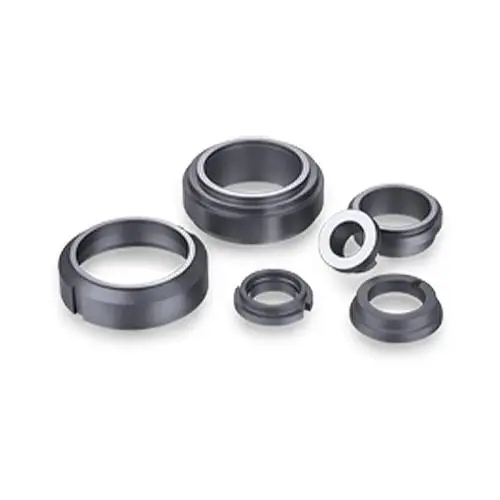
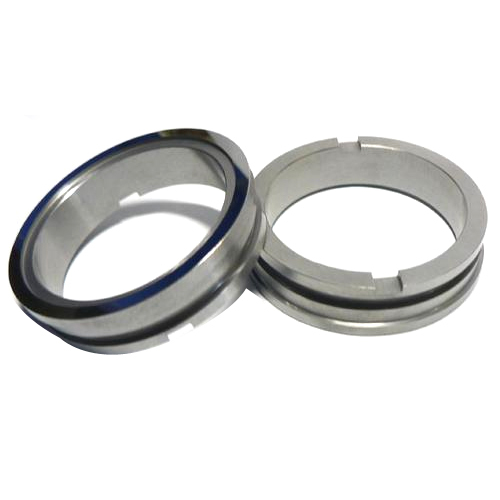
- Moving Ring and Stationary Ring: This is the core "battlefield" of the seal. The moving ring rotates with the shaft, and the stationary ring is fixed on the housing. The end faces of the two form a sealing surface under pressure. Common pairing combinations include "silicon carbide + graphite" and "hard alloy + PTFE", which need to be selected according to the characteristics of the medium.
- Elastic Elements: Components such as springs and bellows are responsible for providing continuous pressing force to the sealing surface to compensate for wear and installation errors. Among them, the bellows mechanical seal has more advantages in high-temperature working conditions because it does not require an additional spring.
- Auxiliary Sealing Rings: Including O-rings, V-rings, etc., they are used to seal the gaps between the moving ring and the shaft, and between the stationary ring and the housing. The materials are mostly nitrile rubber, fluororubber, etc., which need to be compatible with the medium chemically.
- Transmission Mechanism: Such as transmission pins and snap rings, whose function is to transmit the rotational force of the shaft to the moving ring to ensure that the two rotate synchronously.
3. Inappropriate Selection? Avoid These "Minefields"
Only by choosing the right mechanical seal can the equipment be "safe and sound" for a long time. The following parameters need to be focused on during selection:
- Medium Characteristics: Temperature, pressure, viscosity, corrosiveness, solid content, etc., will all affect the sealing performance. For example, for media containing particles, a mechanical seal with a flushing scheme should be selected to avoid end face wear.
- Rotation Speed: Under high rotation speed, the influence of centrifugal force on the sealing surface needs to be considered, and a balanced structure should be adopted if necessary.
- Installation Space: When the axial dimension is limited, a compact mechanical seal can be selected.
A special reminder: Do not "downgrade" the selection to save costs. A chemical plant once used an ordinary mechanical seal instead of an acid-resistant one, resulting in acid leakage, which not only caused equipment corrosion but also triggered a safety accident. The final loss was far more than the cost saved initially.
4. Installation and Maintenance: Details Determine Service Life
A good mechanical seal also requires correct installation and maintenance:
- Before installation, check the runout of the shaft (should be ≤0.05mm) and the finish of the seal chamber to avoid uneven wear of the sealing surface due to installation errors.
- During operation, regularly check the temperature of the seal chamber (generally not exceeding 80℃) and the leakage amount, and stop the machine for inspection in time if any abnormality is found.
- For media that are prone to crystallization or precipitation, the seal chamber should be flushed in time after shutdown to prevent blockage.
5. Future Trends: More Intelligent and Durable
With the advancement of Industry 4.0, mechanical seals are developing towards intelligence. For example, intelligent seals with built-in sensors can monitor temperature, vibration, leakage, and other data in real-time and upload them to the control system through the Internet of Things to achieve predictive maintenance. In addition, the application of new materials such as graphene-reinforced seal rings and ceramic composite materials will further improve the wear resistance and corrosion resistance of mechanical seals.
From unremarkable household equipment to large industrial installations, mechanical seals have always been guarding the safety and efficiency of fluid systems. Only by understanding and valuing them can the equipment operate more reliably and production be more secure. Have you encountered any problems when using mechanical seals? Welcome to share your experience in the comment section!
The Power Behind Every Rotation